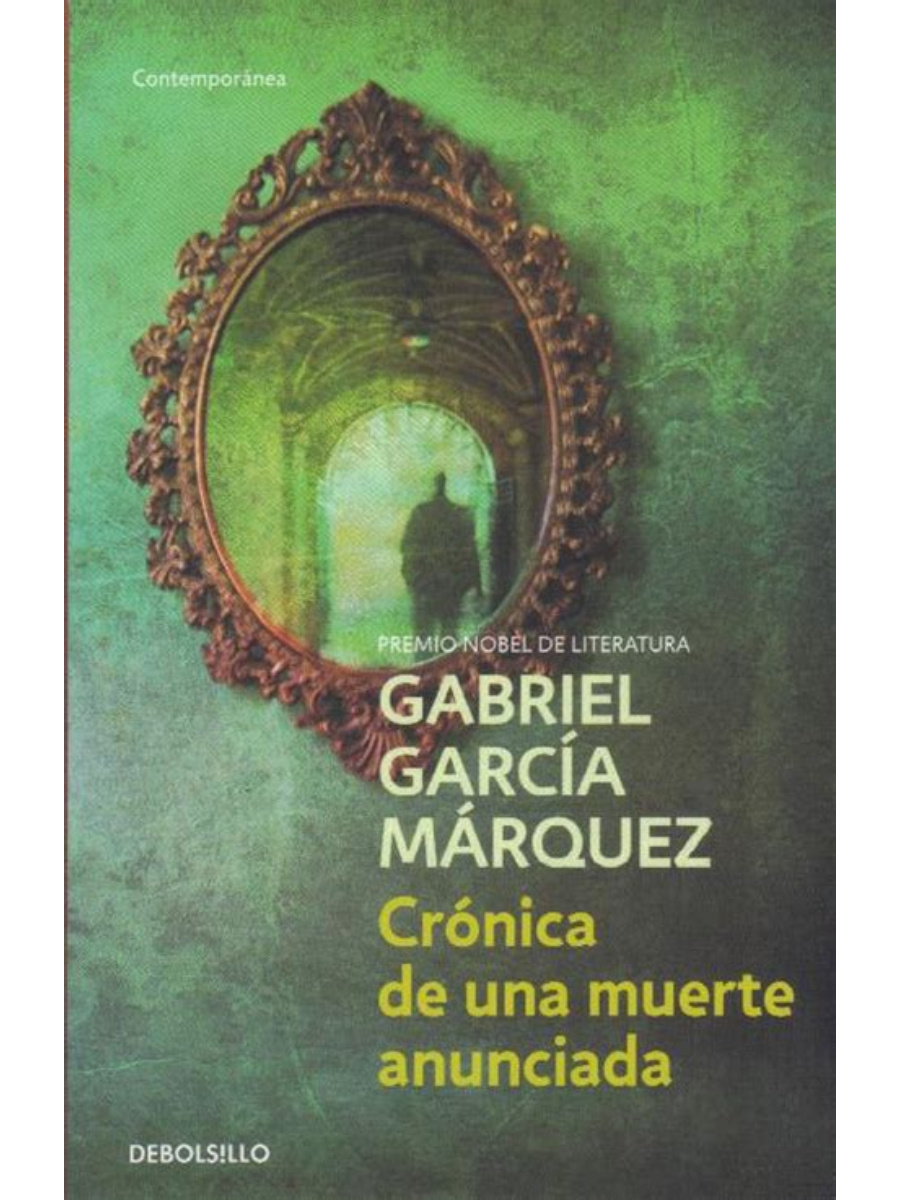


Crónica de Una Muerte Anunciada – Spanish Fiction
$35.99
Gabriel García Márquez
Publisher: Debolsillo
ISBN: 9788497592437
Format: Paperback, 138 pages
Out of stock
Language: Spanish.
«El día en que lo iban a matar, Santiago Nasar se levantó a las 5.30 de la mañana para esperar el buque en que llegaba el obispo.»
Acaso sea Crónica de una muerte anunciada la obra más «realista» de Gabriel García Márquez, pues se basa en un hecho histórico acontecido en la tierra natal del escritor. Cuando empieza la novela, ya se sabe que los hermanos Vicario van a matar a Santiago Nasar -de hecho, ya le han matado- para vengar el honor ultrajado de su hermana Ángela, pero el relato termina precisamente en el momento en que Santiago Nasar muere.
El tiempo cíclico, tan utilizado por García Márquez en sus obras, reaparece aquí minuciosamente descompuesto en cada uno de sus momentos, reconstruido prolija y exactamente por el narrador, que va dando cuenta de lo que sucedió mucho tiempo atrás, que avanza y retrocede en su relato y hasta llega mucho tiempo después para contar el destino de los supervivientes. La acción es, a un tiempo, colectiva y personal, clara y ambigua, y atrapa al lector desde un principio, aunque este conozca el desenlace de la trama. La dialéctica entre mito y realidad se ve potenciada aquí, una vez más, por una prosa tan cargada de fascinación que la eleva hasta las fronteras de la leyenda.
Perhaps Chronicle of a Death Foretold is Gabriel García Márquez’s most “realistic” work, since it is based on a historical event that took place in the writer’s homeland. When the novel begins, it is already known that the Vicario brothers are going to kill Santiago Nasar – in fact, they have already killed him – to avenge the outraged honor of their sister Ángela, but the story ends precisely at the moment when Santiago Nasar dies.
Cyclical time, so used by García Márquez in his works, reappears here meticulously decomposed in each of its moments, reconstructed neatly and accurately by the narrator, who gives an account of what happened a long time ago, who advances and retreats in his story and even arrives much later to tell the fate of the survivors. The action is, at the same time, collective and personal, clear and ambiguous, and catches the reader from the beginning, even if he knows the outcome of the plot. The dialectic between myth and reality is enhanced here, once again, by a prose so charged with fascination that it rises to the borders of legend.
Related products

Berliner Platz: Lehr- Und Arbeitsbuch 3 MIT Eingelegter CD Zum Arbeitsbuchteil
Original price was: $60.95.$30.00Current price is: $30.00.
Berliner Platz: Lehr- Und Arbeitsbuch A1 – Teil 2 MIT CD Zum Arbeitsbuch
Original price was: $39.95.$20.00Current price is: $20.00.

Latitudes 2 Cahier d’exercices (Workbook)
Original price was: $31.95.$15.50Current price is: $15.50.
Latitudes 2 Textbook
Original price was: $49.95.$25.50Current price is: $25.50.