Back to Basics? Why Australian Schools Are Rediscovering Handwriting and Books

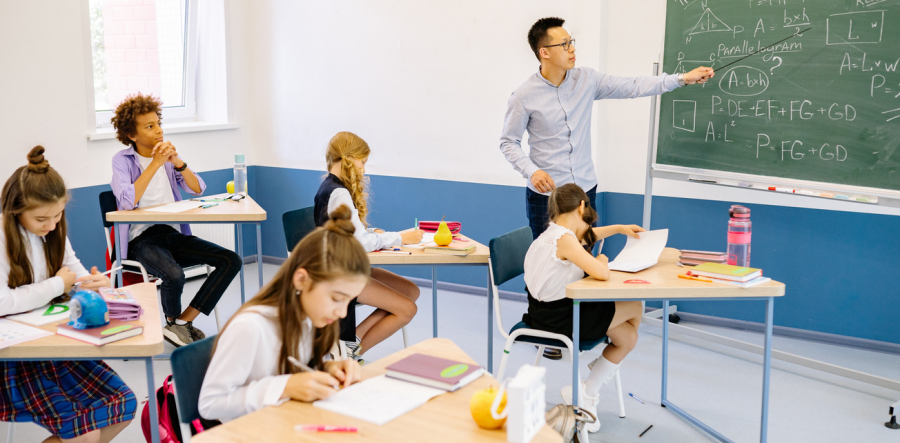
Talking about the resurgence of pens, paper, reading and writing and why hybrid doesn’t just refer to cars
In a ‘Back to the Future’ move, Australian primary schools are taking a considered step towards traditional teaching methods. But could this shift also signal a renewed appreciation for the printed page, encouraging children to turn the pages of physical books rather than swipe their way through screens?
However, let’s be clear: we’re not turning back the clock to the days of slate boards and lead pencils. Nevertheless, here we are in 2026, the very year artificial intelligence well and truly stepped out of the cupboard and into the spotlight, and some Australian primary school students are being encouraged to give their screens a rest, pick up a pen or pencil and open an exercise book. Indeed, it seems that, in a bid to address growing concerns about literacy standards and other identified learning deficiencies, parts of Australia’s education system are taking a deliberate step back to basics.
In practical terms, this new direction, which redefines the role of technology in school education, reflects society’s growing unease about its increasing influence on our personal lives, particularly those of children and young people.
Perhaps part of this shift in thinking comes as technology moves beyond the relatively innocent days of doing the hula with Google and races towards the dizzy heights of artificial intelligence. But where is it all heading? Towards a world of humanoid robot servants at our beck and call (not such a bad thought), or one ruled by super-intelligent robotic masters, where humans suddenly find themselves dethroned as rulers of the universe? Now, that’s a very scary thought.
For now, however, this contemporary re-examination of educational philosophy has prompted a rethink of the curriculum and the role technology should play within it. In many ways, this emerging approach echoes the Buddhist concept of the Middle Path — or, to borrow a term from the automotive world, perhaps we could call it the Hybrid Path.
Interestingly, the Buddha’s teachings encourage moderation and warn against the extremes of indulgence and self-denial. In simpler, more contemporary language, we might interpret this as: “Not too happy, not too sad”.
And, in a sense, this ancient philosophy seems to resonate with society’s latest determination to rein in, recalibrate and reshape technology’s place in our lives. After all, technology is not the enemy. It is a powerful tool, but one that needs to be used wisely. As the old saying goes, we mustn’t “throw the baby out with the bathwater”.
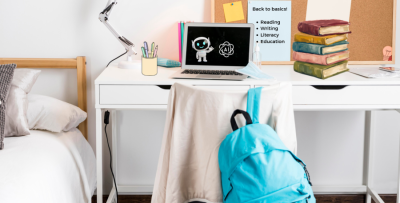 Against this backdrop, Australian education authorities are increasingly reconsidering the balance between traditional teaching methods and digital learning. Proposals and policies aimed at limiting classroom screen time reflect growing concerns about literacy standards, digital distractions and the potential consequences of excessive technology use on children’s learning and development.
One significant change will see Year 5 students return to handwritten NAPLAN writing assessments from 2028, subject to final implementation advice. Year 3 students have already completed their writing assessments on paper.
New South Wales is leading the charge. From 2027, public primary schools will introduce screen-time limits ranging from 15 minutes daily for Kindergarten to Year 2 students to 45 minutes for Years 5 and 6. Guidelines also recommend at least one hour of pen-and-paper learning each day.
Victoria is following a similar path, restricting digital device use in primary schools and ending new bring-your-own-device arrangements from 2027.
Education experts argue that handwriting encourages concentration, strengthens literacy development and helps children organise their thoughts without the distractions of digital devices.
However, the changes do not signal the end of computers in classrooms. Digital literacy remains essential, particularly as artificial intelligence becomes increasingly prominent.
Instead, the emphasis is shifting towards a more balanced approach, combining traditional teaching methods with purposeful technology.
For Australia’s youngest learners, the message is becoming clear: sometimes the simplest tools remain among the most effective.
So, as we navigate the brave new world of artificial intelligence, perhaps the future of education lies not in choosing between the screen and the printed page, but in finding a sensible balance between the two. After all, going back to basics doesn’t mean going backwards. It may simply mean rediscovering the value of what has always worked. And while AI continues its spectacular march into the future, perhaps there’s something reassuring, even revolutionary, about a child picking up a pencil, opening an exercise book or turning the pages of a real book.
In this latest chapter of education’s ‘Back to the Future’ journey, perhaps the most forward-thinking move is, ironically, a small step backwards.
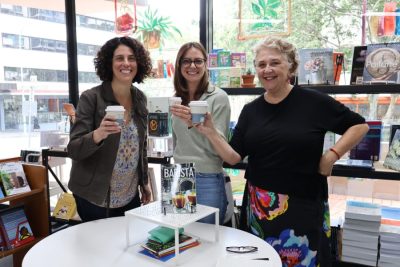
Come and view the future of books at The Language People bookstore, 474 Upper Edward Street, Spring Hill, Qld
Article by