From Refugee Classrooms to Australian Stories: The Clare Harris Journey to Creating English Resources


Learning a new language can open doors, but settling into a new country involves learning much more than words and grammar. It means discovering unfamiliar places, systems, customs and everyday routines — and gradually building a sense of belonging.
Clare Harris‘s more than 20-year journey as an English teacher, writer and publisher has been shaped by a desire to help adult migrants and refugees navigate that journey through resources that feel relevant, accessible and recognisably Australian.
Her journey began unexpectedly while she was studying English Language and Literature at university in the UK. Clare had volunteered as an adult literacy tutor, but when she arrived, there was no immediate need for her. Instead, she found herself in an ESL program, working with a young woman who had almost no English.
The learner worked in her family’s restaurant and had just one afternoon off each week. She devoted that precious afternoon to learning English.
“Her commitment to learning really stayed with me,” Clare recalls.
That early experience helped shape the teacher Clare wanted to become. Another important influence was Dr Alastair McGregor at ECU, whose teaching demonstrated that adult education could be both rigorous and joyful.
“It wasn’t just the content, but his great good humour and respect for us as adult learners,” Clare says. “It made me decide I wanted my classes to be full of fun and acknowledgement of learners’ life experiences.”
Those ideas became even more significant during the years Clare spent working with refugee English teachers and learners in Thailand. Her students came from extraordinarily different backgrounds, including people who had fled war zones, lived under the Pol Pot regime or spent years in refugee camps.
Clare became acutely aware of how little many of her learners knew about Australia —something that was hardly surprising given their experiences. Alongside English classes, a cultural orientation program helped prepare them for life in Australia, but Clare understood that there would be so much more to learn once they arrived.
The challenges were not always the big, practical questions, such as how Centrelink works. Often, it was the smaller, everyday details that could make a new country feel unfamiliar.
Those experiences strengthened Clare’s belief that English-language resources should connect with learners’ own lives and experiences. Language learning becomes more meaningful when learners can recognise the world around them in the stories, activities and situations they are studying.
That philosophy has remained at the heart of Clare’s work ever since.
As a teacher, she had always created resources when she could not find exactly what her learners needed. Writing little stories and making up exercises was simply part of teaching.
Her move into professional resource writing developed gradually, helped by supportive colleagues and a workplace that encouraged creativity.
 Her work eventually led to writing for NCELTR at Macquarie University and other publishers. One of her proudest memories remains “It’s Over to You”, created during the early days of the Distance Learning Program, when students relied on books, cassettes and a weekly phone call. Many were living in isolated circumstances, yet they persevered with their English learning.
Clare particularly valued the opportunity to create resources with an Australian context.
International graded readers have their place, she says, but they often contain unfamiliar settings and cultural references. Australian learners might encounter stories involving trips to London or be asked to respond to questions about a “ZIP Code” — things that need to be adapted for life here.
Clare believes Australian content matters because language learning is also about understanding the country in which you live.
She understands that process personally, too. Clare was born in New Zealand and grew up in the north of England before migrating to Australia herself. Although she was not disadvantaged by language, she remembers being conscious of how much she did not know— the places she had never seen, the systems she did not understand and the everyday knowledge she had yet to acquire.
Even while teaching Citizenship classes, Clare discovered there were aspects of how the Australian government worked that she had not fully understood herself.
When NCELTR eventually stopped publishing the specialist Australian resources Clare valued, she was left with two stories, “The Coat” and “Can You Keep a Secret?”, and no obvious place to publish them.
Then, after her mother died and Clare inherited some shares, she had an idea: perhaps she could use the money to publish the books herself.
The result was daunting but exciting. Clare found an experienced designer and illustrator, developed photocopiable activities and teacher notes, and took the leap from teacher and writer to publisher.
Another source of joy came from “The Coat”. Clare heard that students reading two chapters a week in class had become so engrossed in the story that they went to the library to borrow the book because they could not wait to find out what happened next.
That is what Clare hopes to inspire in learners: not simply the ability to read, but the excitement of wanting to read.
Today, through projects such as “Read About Australia“, Clare continues to create resources that connect English learners with the country around them.
After more than 20 years of teaching, writing and publishing, her goal remains beautifully simple: to help learners discover language, discover Australia — and perhaps, along the way, discover a greater sense of belonging.
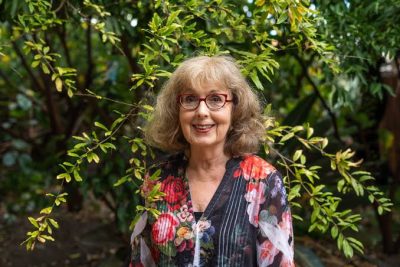
FACTBOX: CLARE HARRIS
EAL/ESL educator, writer and independent publisher
Article by