What an 18-Year-Old Volunteer Learned in a Refugee Camp… and How It Changed the Way She Taught English

What a surprise. What a culture shock.
For an 18-year-old Australian of Italian heritage, raised in the comfort and security of everyday Australian life, having a volunteer teaching experience in a refugee camp proved to be life-changing.
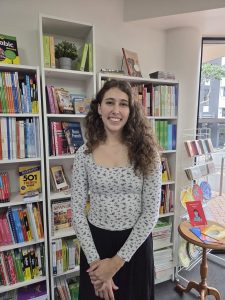
The experience set Lauren Piovesan on a path towards becoming an English language teacher. Years later, after working in Australian classrooms, she recognised striking similarities between the challenges she had encountered in the refugee camp and those she was seeing among her own students. That realisation would eventually lead to the creation of ESL Reads, a successful series of English language readers designed specifically for adolescent and adult learners.
Lauren’s journey began in 2014 when she and three fellow university students followed in the footsteps of a former teacher and chose a road less travelled and volunteered in one of the refugee camps along the Myanmar–Thailand border.
Established in the early 2000s, the camps provided refuge for minority groups fleeing persecution in Myanmar. When Lauren arrived, she found herself among thousands of people living in bamboo huts with few of the comforts or opportunities many Australians take for granted.
“There were young people who had been born in the camp and had never known any other life,” she recalls.
The experience challenged many of her assumptions about the world. Working as a volunteer, she discovered not only the resilience of her students but also a passion for teaching she had never expected.
“I had always wanted to be an architect,” she says.
“But after that experience, I decided to become a teacher—something I had never imagined.”
During her time in the camp, Lauren also noticed the limited range of English language resources available to adolescent learners.
“The books we were using may have suited a primary school beginner,” she says, “but they weren’t appropriate for a 15-year-old who was just beginning to learn English.”
After returning to Australia, Lauren completed a Bachelor of Education, majoring in English Literature with a minor in TESOL.
Her first teaching position was at a multicultural secondary school in Geelong, where she encountered a familiar problem. Despite decades of English language teaching around the world, there were still remarkably few reading resources that were genuinely suitable for older beginner learners.
Many books were written for young children, with stories and illustrations that failed to reflect the maturity, interests and life experiences of teenagers and adults who were only beginning to learn English.
Looking back, Lauren recognised that she was encountering many of the same issues she had observed in the refugee camp.
“There still weren’t many readers that I felt happy using with my students,” she says. “Older learners needed stories that respected their age and experiences while supporting them as beginning readers.”
Lauren later spent three years teaching at The River Nile School, an independent senior secondary school supporting young women from refugee and refugee-like backgrounds. The experience reinforced her conviction that teachers needed better reading resources for adolescent and adult English language learners.
When Melbourne entered its extended COVID-19 lockdowns, Lauren, like teachers everywhere, shifted to online learning. The disruption also provided an opportunity to begin developing the classroom resources she had long wanted to use herself.
Those ideas gradually evolved into ESL Reads, a growing collection of printed and digital readers written specifically for adolescent and adult English language learners. 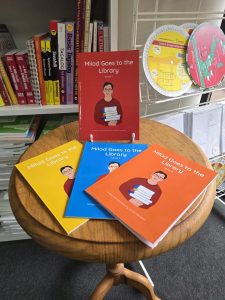
“We combine the magic of storytelling with the latest technology to engage adolescent and adult English language learners in reading,” Lauren says.
“Our stories reflect diverse cultures, migration journeys and settlement experiences, allowing learners to see themselves represented in the books they read.”
As the collection has expanded, so too has Lauren’s focus.
“My attention has increasingly turned to developing a decodable reading series,” she explains, reflecting the growing emphasis on structured literacy and evidence-based reading instruction.
Looking back, Lauren sees a clear thread running through her career—from the refugee camp, to the classroom, and ultimately to the development of resources that address a need she had encountered in both places.
If you want to know more you can find the ESL Reads here.
Article by