David Wenham Does ESL

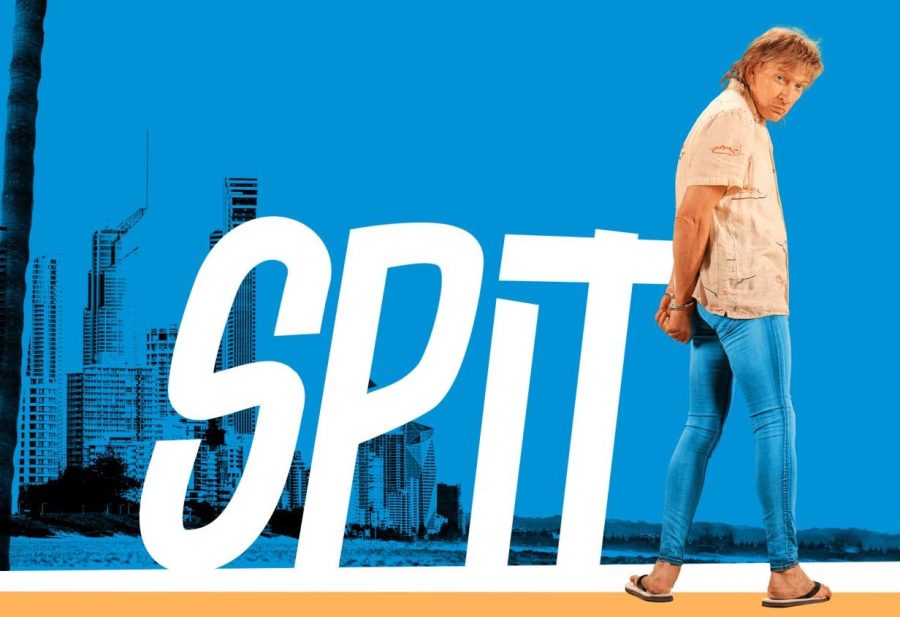
Yes, you heard it here first. And, mate, we're asking the big questions.
Get my drift?
How did acclaimed Australian actor David Wenham transform into Johnny "Spit" Spitieri — an unofficial ESL teacher living in an immigration detention centre? How did the well-spoken, neatly coiffed, educated actor disappear so completely beneath the mullet, the strawberry-blond hair, the endless stream of Aussie slang and the persona of a lovable career criminal?
If BBC English conjures images of grey suits, skinny ties and immaculate short back and sides, then Australian English belongs in thongs, mullets, short shorts and ridiculously tight blue jeans. That's exactly the look David Wenham adopts as he morphs — body, soul and speech — into the unforgettable protagonist of Spit.
Released in Australian cinemas in 2025 and now streaming on Netflix, Spit is a treasure trove of authentic Australian English. More than just a comedy, it's a surprisingly insightful lesson in mateship, Australian culture and the wonderfully chaotic way we communicate, as Johnny finds himself informally teaching a group of adult Middle Eastern refugees the finer points of surviving Australian conversation.
Unlike another great Australian classic, The Castle, where the humour springs from everyday suburban life — gifting us immortal expressions such as "Tell him he's dreamin'" and "It's the vibe" — Spit dives headfirst into the colourful world of Australian slang.
There is no shortage of colourful language, from enthusiastic exclamations to expressions that probably won't appear in any English textbook. And that's only the beginning.
Throughout the film we see many of the quirks that make Australian English so distinctive: shortening almost every word, speaking in understatement, taking the mickey out of one another and using swear words more as punctuation than aggression. For newcomers to Australia, understanding these habits can be almost as important as learning grammar.
Of course, Spit isn't the first — nor will it be the last — celebration of Australian English.
Just last week I watched a hilarious reel by comedian Kitty Flanagan, who affectionately described Australians as speaking "like they've all had a stroke" — a tongue-in-cheek observation about our tendency to slur words together and leave half the syllables behind.
Mind you, Australian English doesn't have a monopoly on baffling visitors. Scottish and Irish accents have been delighting — and bewildering — travellers for generations. I have to admit that during my own travels there were times I could barely understand an entire sentence.
Perhaps that's the real joy of language. Every country has its own rhythms, shortcuts, expressions and cultural quirks that don't always make sense to outsiders. Australian English simply wears its eccentricities with particular pride. Films like Spit remind us that language is far more than vocabulary and grammar — it's identity, humour, belonging and community.
And if learners can master Australian English after spending time with Johnny Spitieri, they can probably survive just about any conversation this country throws at them.
If you would like to find some real Aussie ESL books click here.
Article by